“The possession of knowledge carries an ethical responsibility.”
The human sciences.
As the name suggests, human sciences study humans. In the field scientists hope to discover more about society, psychology, culture, and other aspects of human life and the human experience. This contrasts to natural sciences in which scientists put a higher emphasis on the external world, where the goal is to understand natural occurrences (one may think of biology, chemistry, geology, physics…).
Some of the most popular search results related to the human sciences include questions such as, “Why are the human sciences important?” and “Why do we study the human sciences when they are useless?”
To this I have to ask back: why would we not?
When we are all trying to understand the world we live in, why would we not also seek to understand ourselves?
We, too, are constantly changing but also vastly unexplored, despite the idea that there is little to nothing to learn about ourselves based on the fact we live our lives extensively in the body and society that surrounds us. There still is much to learn and I believe we should continue to do so, however, it is not easy to ignore the controversy that arises from the human sciences surrounding how we get new information.
We are no longer testing when balloons will pop (I have no idea why this was the first thing that came to my brain), we are testing on humans.
Pavlov and his dogs are fairly known. In case you need a refresher, Pavlov conducted some experiments on dogs to explore the concept now known as classical conditioning.
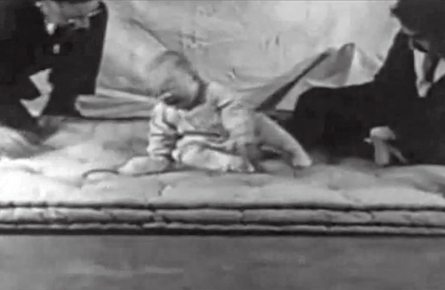
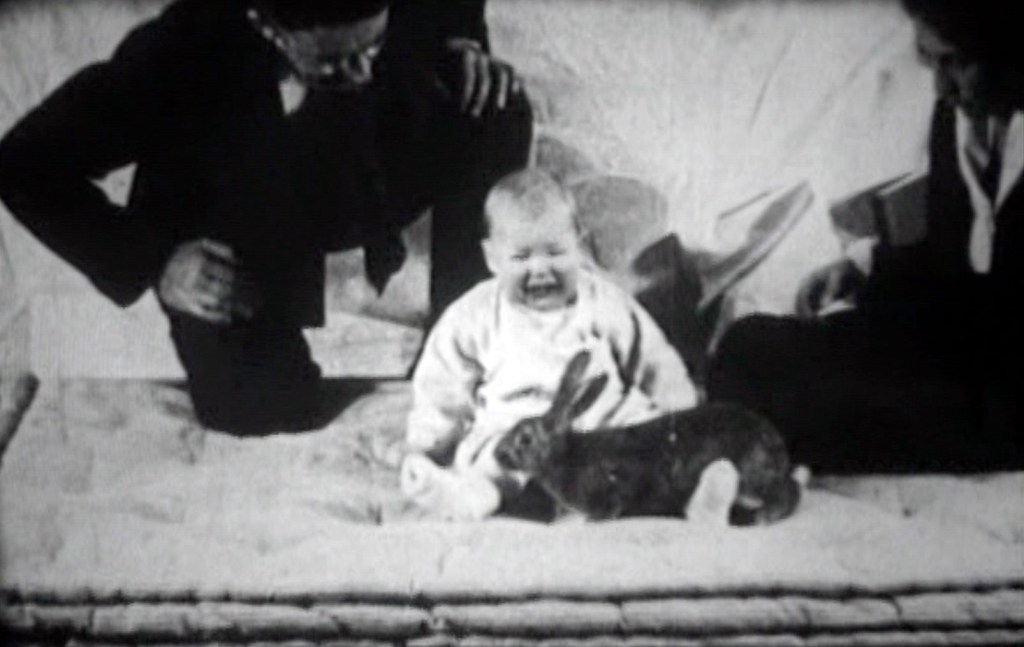
This occurred in 1902, 18 years later, scientists began to wonder if the same could apply to humans. So, they decided to test a nine month old baby to see if they could condition him. The baby was given the name “little Albert”.
At the beginning of the experiment the scientists (John B. Watson and Rosalie Rayner) put a white rat in front of little Albert, to which he gave no response. Then, they showed him the white rat again. This time however, after little Albert saw the rat Watson and Rayner made a loud noise to scare Albert.
Eventually, Albert began to associate not only the rat with fear, but objects with fur with fear.
While the scientists were testing the ability to condition humans and did discover some knowledge, what ethical responsibilities do we have? Are we in any way entitled to the ability to obtain knowledge?
Little Albert was obviously put through mental stress for the benefit of others. I’ve already stated the importance of learning inside the human sciences, however, in cases such as this I can’t help but ask if it was really worth it.
In Pavlov’s experiments he used dogs. In learning about such types of experiments we automatically disassociate and make the assumption that learning is more important than the test subjects. However, I believe that when studying topics that learn more towards natural sciences we still need to determine just where to draw the line.
One factor of both of these experiments is that we were at least able to learn something.
You may have noticed the image at the top of this post.
It is an image from the Stanford Prison Experiment, an experiment conducted by Philip G. Zimbardo. Zimbardo’s goal was to analyze the effect of power dynamics by creating a fake prison. He gathered college students and randomly assigned them roles as either prisoners or guards. Throughout the course of the experiment the prisoners were so psychologically damaged that Zimbardo had to end the experiment short (ending on the sixth day rather than playing out the entire two weeks it was supposed to).
There’s a lot to discuss surrounding the experiment, and I recommend looking more into it if you haven’t already. I initially heard of the experiment through this video, however it isn’t exactly the best source (no shade to that girl) with other videos existing on YouTube alone from Vsauce and BBC.
One of the most damning facts about the Stanford Prison Experiment is that we learned nothing from it. Zimbardo used such shitty methodology that he practically just created an experiment that resembles a sick reality television show.
I bring this experiment up, not only because it was unethical, but also because it gave us nothing. We can try to solve the dilemma of human testing by requiring that the results will be beneficial in the end, but we don’t always know if they will be because one of the realities of science is that sometimes experiments don’t work out (I’m aware that in the case of the Stanford Prison Experiment Zimbardo is largely to blame for failing to think through the logistics of his experiment, but in many experiments human error causes mistakes, large or small).
So, what do we think and do moving forward?
I’d like to say that each situation has to be assessed individually, but there’s many cases where the answer is still unclear.
If I had to give an answer right now I would say that we have a responsibility to heavily consider ethics in the pursuit of knowledge. While we are, and should, always strive for growth, I feel that we’re in a time where experimentation that is simply immoral should be avoided (but that brings up the questions of what our morals are and how we can collectively decide what is and is not moral). But still, we continue to test makeup on animals (bringing up issues of its own, as we’ve decided it is wrong to test on humans so the solution is to test our products on animals).
In the end we’re stuck in a situation where we want to learn, but don’t want to harm with ethics somewhere, all jumbled up.












 The Cons of Writing