Just imagine being a celebrity.
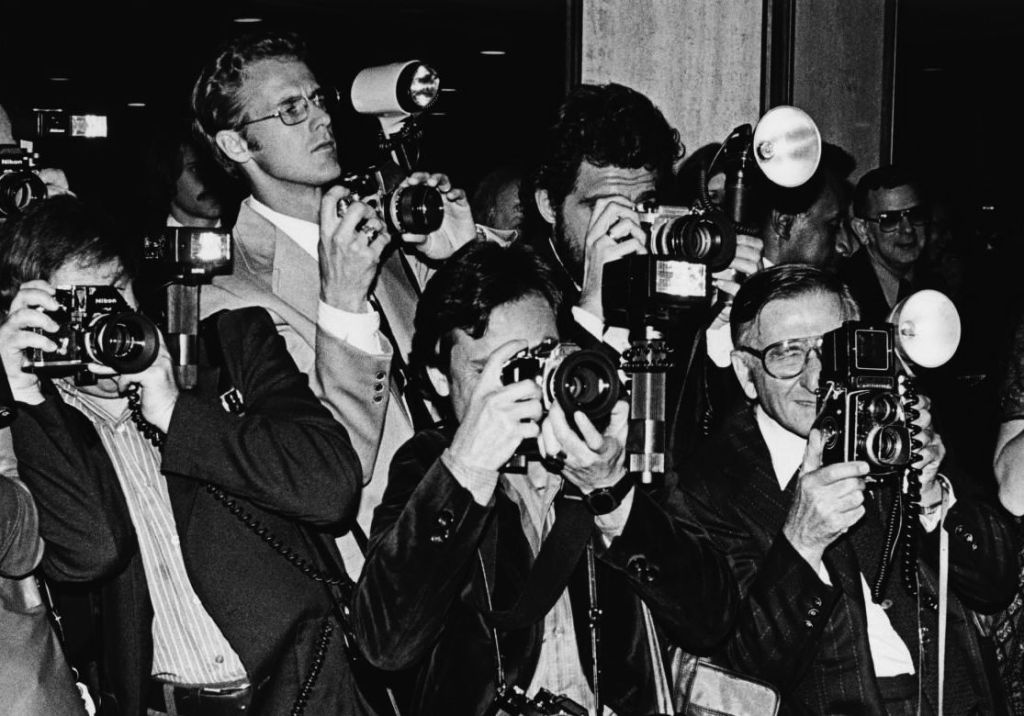
Everyone knows who you are. You can throw around money as fast as you can in Monopoly. You’re constantly put under pressure to please the public, and if you’re unsuccessful in doing so your entire career can end in hours. There’s always someone watching you. People constantly take pictures of you without your consent and spread them so everyone can see. Sometimes, your failure and humiliation can mean their success.
What a life!
According to Select USA (which is part of the U.S. Department of Commerce’s International Trade Administration) the U.S. media and entertainment industry is valued at 717 billion dollars. It makes up for a third of the global industry.
Needless to say, the United States the entertainment industry is excessively influential. Those who are fans are wholeheartedly obsessed, leading to an excess of paparazzi companies. These companies profit from exploiting the lives of celebrities, and they make quite a lot of money.
However, across the water is a country that seems to defy our standard. The country has made over 83 billion dollars in recent years due to a humongous growth in the global popularity of its pop culture. Radiolab tackles the peculiar case of South Korea’s fan culture and paparazzi in the episode “Kpoparazzi.”
The episode begins by defining the relationship between fans and idols. The term idol is a tale-tell sign on its own. It is used as a substitute for the word celebrity, but the connotation is still so different. The stars are expected to be perfect in every way. They are the embodiments of fans’ fantasies. They belong to the public and the fans. They are idols. Radiolab wonders about what the fans want to see. If the idols fit into the perfect illusion, “…do you want to know everything? Or do you want to know nothing?”
This on its own sparks a question of what an appropriate relationship between a celebrity and their fans looks like, as well as what it means to be a celebrity. Our common sense leads us to believe that it is impossible to belong to your fans, but if they are the foundation of your career should you be obliged to please them in every way?
However, that’s just the tip of the iceberg.
In general, South Korea has had censored media after the Korean War. The government felt the need to conceal potentially controversial news surrounding topics such as politics leading to the censorship of almost everything (including celebrity gossip).
A man named Lee Myung Joo came into the picture and changed everything. Lee believed in independent press and was dying for a way to get closer to it. At the time (2010) he was working for Sport Seoul, and he decided to take influence from western news sites such as TMZ and The Sun. For thirty days Lee practically stalked two of the largest stars at the time, Jonghyun from the kpop group Shinee and actress Shin Se Kyung, before the day he calls “Dating day,” or “D-day.”
The first paparazzi photos in Korea were released in October of 2010, and there was public outrage. Soon after news groups focused on the lives of celebrities began popping up, Dispatch being one of the most notable. For two years idols were outed so often that the fans who were originally so shook up became desensitized. Idols were able to share more of their personal lives with less consequences.
Does this mean the paparazzi, known to be a burden, known to use personal details of other people’s lives for money, known to stalk, actually served as liberators of sorts? The tabloids found a way to become what could be considered the great equalizer, the connection between artists and their followers.
It just seems so immoral. It’s impossible to believe that exposing someone’s most private details can create a level of comfort. Yet, because the paparazzi showed the normality of celebrities so often it happened. Paparazzi continue to get shamed for their job, but when they do their job the right way they find a way to comfort fans by showing the fans the last thing they would want to see. Or this all could be so different from what would be expected due to an extreme cultural barrier. They took techniques from the west to use in a country where pop culture is so different.
Nevertheless, in the end we can’t help but strong emotions against paparazzi after remembering the extreme behaviors so many present. Next time you see paparazzi photos, look at the celebrity. Try to feel what they feel, discover what they’re thinking. Ponder whether or not they actually paid for staged photos. Examine what effect the paparazzi may have.
 The Cons of Writing
This is one of the best blogs I’ve ever had the pleasure of reading. I can’t wait for Mr. Brewer to tear it apart.
LikeLiked by 1 person
WOW! This is such a good blog!
I really like how your concerned with such a topic that so few people know about.
You did a really good job with introducing the topic to an audience that probably doesn’t know too much about the entertainment industry in Korea. This really made me question the way we view celebrities and the way we put them on a pedal stool.
Can’t wait for your blog next week. 🙂
-Stephen King
LikeLike
I like how you tried to show a different perspective of the good being bad (the celebrities) and bad being good (the paparazzi). I was also thinking about the way we have to unlearn to be able to learn more and thought it fit perfectly into your concept. Way to kick them off their pedestal… I meant pedal stool :))
LikeLike
This is a really neat intercultural investigation of media. I am fascinated by the idea that pop-culture media “opened up” the media landscape in S. Korea. It’s weird, but it could also be that this pop culture obsession gives an IMPRESSION of free and open media without actually having a lot of open-ness. To be honest, I also feel like this is what has begun to happen in the US: we FEEL like we are getting all the news, when really we are just getting a barrage of sound-bites.
LikeLike